

Pudendal Neuralgia
The pudendal nerve travels through some tight places around the inside of your pelvis, where it can get irritated or be put under pressure, especially with cycling or childbirth. Sometimes no cause for the problem is found.
The pudendal nerve is the nerve that goes to the muscles and skin between our legs where we sit. Some people call this the ‘saddle area’, which means that it affects the part of you that would touch a saddle if you were riding a horse.
What are the symptoms of pudendal neuralgia?
There are many different symptoms, but they are usually worse when sitting. The symptoms include:
pain in the vicinity of the pudendal nerve-anywhere from the clitoris or penis back to the anal area. It may be on one or both sides, near the front, or further back. This pain is usually a burning or sharp ‘electric’ feeling.
sexual problems with less feeling in the penis or clitoris
difficulty opening your bowels
numbness in the area affected
What can I do to help the problem?
When you sit, use a ‘U-shaped’ foam cushion with the front and centre area cut out, or sit on two towels rolled up under each buttock so there is no pressure in the centre. While pressure on the pudendal nerve may have been the problem that started the pain, it is common for pelvic muscle pain or spasm to develop as well. Tight pelvic muscles can also be the cause of pressure on the nerve. They are commonly interrelated. Once pain has been present for more than three to six months, there may also be changes to nerve pathways described as chronic pain.
A pelvic physiotherapist who understands how to ‘down train’ pelvic muscles (not tighten them) can teach you how to relax and lengthen your pelvic muscles, taking pressure off the nerve and reducing muscle pain.
Avoid straining when you pass urine or open your bowels and avoid overly strengthening your pelvic muscles.
Some clinicians offer botox to the pelvic floor muscles or pudendal nerve blocks for this problem.
To help the nerve recover, you should avoid activities that place pressure on the nerve, such as sitting or cycling.
For more information, we highly recommend Pudendal Hope, an organisation for people experience Pudendal Neuralgia.
Sports Medicine health professionals regularly have patients presenting with symptoms of pudendal neuralgia (PN). PN is a recognised cause of chronic pelvic pain in the regions served by the pudendal nerve, typically presenting as pain in the penis, scrotum, labia, perineum or anorectal region. Other symptoms may include dysuria (pain passing urine), urge incontinence and pain during or after ejaculation in males and people assigned male at birth. There may be corresponding erectile dysfunction problems including impotence, impacting on relationships. There is a lack of accessible and clear information on this area.
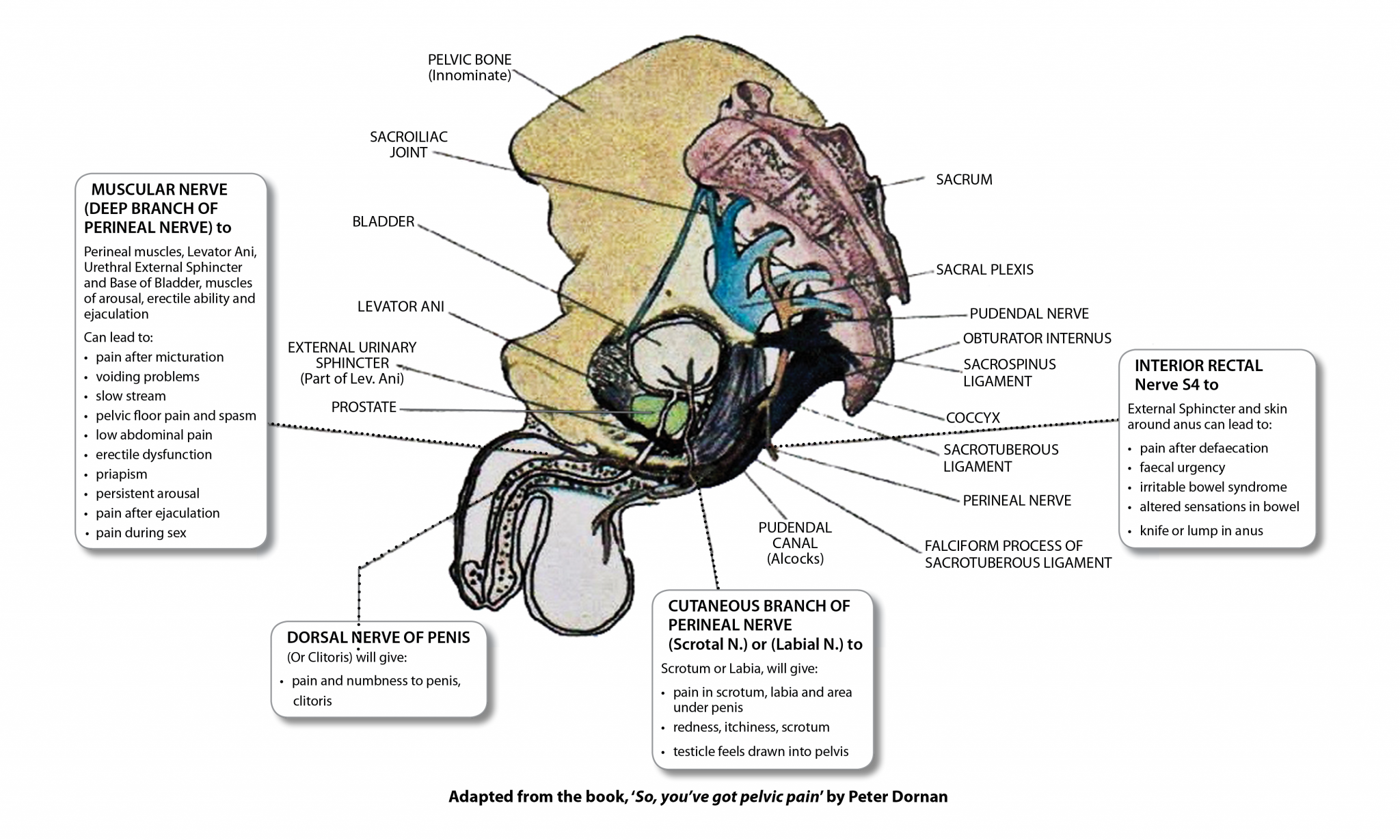
Mr Peter Dornan, a physiotherapist from Brisbane with a specific interest in pudendal neuralgia describes the symptoms associated with pudendal neuralgia in men and people assigned male at birth in the following diagram.
The Pudendal Nerve has 3 main branches that are variably affected. The diagram above shows the different symptoms associated with problems from each of the branches of the Pudendal Nerve.